
When talking about mobile apps or app development, we are normally talking about development for mobile devices. This includes smartphones and tablets. There are also apps for web and smartwatches, but here we are just talking about mobile devices like phones and tablets.
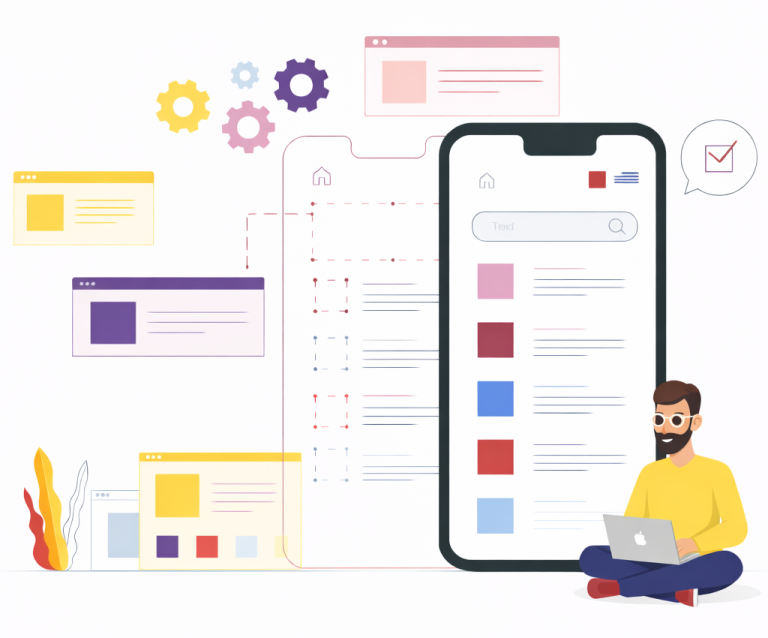
Mobile Apps are software applications developed to work specifically on a smartphone, watch and tablet. Today the majority of people spend more time on their mobile digital devices than they do in any other device like a laptop or pc.
The term app is a short term of software application. It became very popular. In 2010 it was listed as “Word of the Year” by the American Dialect Society.
The app is very important for every company. With the rise of smartphones and tablet usage, apps are becoming the norm nowadays. The majority of people spend their time online by using apps.
Many people think that mobile apps are only useful for big-name or brands like OLX or Amazon, But of course, they are 100% wrong. More and more small and large businesses are following the mobile trend and understanding that a solid mobile strategy is more than just a mobile-friendly or responsive website. Only a responsive website is not enough Today. As users are shifting to mobile. A mobile app has become a vital marketing tool that even small business owners cannot live without.
People search for new apps almost every day and you want your listed in-app store. With a mobile app in the app store, you’re encouraging potential customers to download and install it on their phone.
If a customer will install your app on his/her cell phone than he/she can see your company information any time – sometimes even if they don’t have internet available in their area or mobile data.
Another advantage of growing your app is getting people to share your app itself or it’s content with their friends and family member on social media. As a particular app user, you can quickly share to any app (Email, WhatsApp, IMO, Messenger, Facebook, etc) in a much easier way as compared to a web browser.
CPM for ads in mobile apps is normally higher than in web apps. Many people use ad blockers for their web browsers which can lower your revenue. But in mobile apps, it’s not possible to blocks ads.
Users spend a lot more time on mobile apps than they do on the computer or browser. Recent research clear that mobile users spend 86% of their time using apps. The popularity of apps has increased and is continuing to rise. According to eMarketers, the average user “spends about 3 hours per day using apps and only spend 51 minutes on a mobile browser.
Signup a customer for the first time is easy. But resale them can be challenging. Mobile apps give you the opportunity to re-engage them by sending them to push notifications on their mobile phone. Push notifications are very important for any mobile app. According to a local survey, when a user receives a push notification on his/her mobile phone, they open your app 88% more than a user who doesn’t receive a notification.
Mobile apps provide a much faster alternative than mobile web browsing. Browsing requires a user to open a web browser then enter a URL and wait for a website to load, on other hands mobile app only takes a second to open. Because the majority of contents are stored in the application itself, making it possible to function even offline.